


For a decade, much of Bali’s new building went to the west coast, around Canggu and Seminyak. In 2026, those areas are dealing with heavy traffic, a crowded rental market and new rules on licensing and land use. People who plan to live in Bali for months or years are increasingly looking at established, slower areas instead. Sanur, on the south-east coast, is one of the clearest examples.
Congestion has become a policy issue
Traffic in the south-west is now official government business. When the province and state railway company KAI signed an agreement in September 2026 for a tram from the airport to Canggu, they described the corridor as carrying about 150,000 people and 80,000 vehicles a day. The tram is not due to open in full until 2029.
The road itself is hard to fix. In May 2026 Deputy Governor I Nyoman Giri Prasta said the Canggu shortcut cannot be widened, because space is limited and family temples stand along the route. He also said the province would not prioritise new roads in Canggu. Instead it is looking at a sea taxi from the airport.
For someone visiting for a week, traffic is an annoyance. For a resident, it shapes every day: school runs, doctor’s appointments, the supermarket, picking up family from the airport.
A crowded rental market, and a licensing clean-up
Bali’s supply of short-stay rooms has grown faster than demand for them. BPS Bali figures show non-star accommodation, which includes many villas and guesthouses, was 43.16 per cent occupied in August 2026, down from 50.26 per cent a year earlier. Industry groups such as the hotel association PHRI say a large part of the pressure comes from unlicensed rentals.
The government is now acting on licensing:
- Platform checks. In May 2026 the Jakarta Post reported Tourism Ministry figures showing that, of 470,000 accommodation listings on nine online travel platforms nationally, only about 31,000 had a verified business registration number (NIB). Governor Wayan Koster asked Airbnb, Agoda, Booking.com and Traveloka to promote only licensed, tax-paying accommodation.
- Delisting. The Tourism Ministry said about 1,600 unlicensed operators would be removed from booking platforms from 1 August 2026, unless they obtained permits first. The Deputy Tourism Minister stressed that the aim is to help owners get licensed, not to close villas.
- Land use. After deadly floods in September 2025, the governor announced a ban on new commercial buildings, including villas and hotels, on productive farmland. This became Bali Provincial Regulation No. 4 of 2026, which controls the conversion of productive land and bans nominee land ownership, where land is held in someone else’s name.
For long-stay residents, the practical effect is simple. Paperwork matters more than ever, both for the home you live in and for anything you might rent out. For legal questions, speak to an independent notary or lawyer.
What established areas offer
Sanur was one of Bali’s first beach resorts, and it shows. Development has spread over decades rather than a few years. It is mostly low-rise, with mature trees and neighbourhoods where Balinese families, long-term foreigners and visitors live side by side. The beach faces east, towards the sunrise, and fast boats run from Sanur Harbour to Nusa Penida and Nusa Lembongan.
Three things matter most to long-stay residents:
- Healthcare close by. Bali International Hospital opened in the Sanur Special Economic Zone, a health and tourism zone, in June 2025. President Prabowo inaugurated it on 25 June 2025. It has 255 beds, eight operating theatres and four cardiac catheterisation labs. For older residents and their families, having a hospital of this size nearby is a real factor in choosing where to live.
- Daily life without the drive. In an established area, the beach, a supermarket, a pharmacy and a café are often within a short ride. Life does not depend on one congested road.
- Access without the bottleneck. From the Sanur side, the Bali Mandara toll road over Benoa Bay leads to the airport and Nusa Dua. New projects are aimed mainly at the west-coast corridor.
Who is choosing quieter areas
There is no official count of foreigners moving between areas of Bali, so treat any claim of a “migration” with care. The pattern visible in policy and data is clearer. The western corridor is congested. Unlicensed short-stay rentals are under pressure. Provincial rules now favour fewer, better-documented developments over more of the same.
For residents on a KITAS or KITAP stay permit, one small benefit is that the Rp150,000 tourist levy does not apply. Under the 2025 amendment to the levy regulation, these permit holders are exempt.
What this means for Valora Sanur
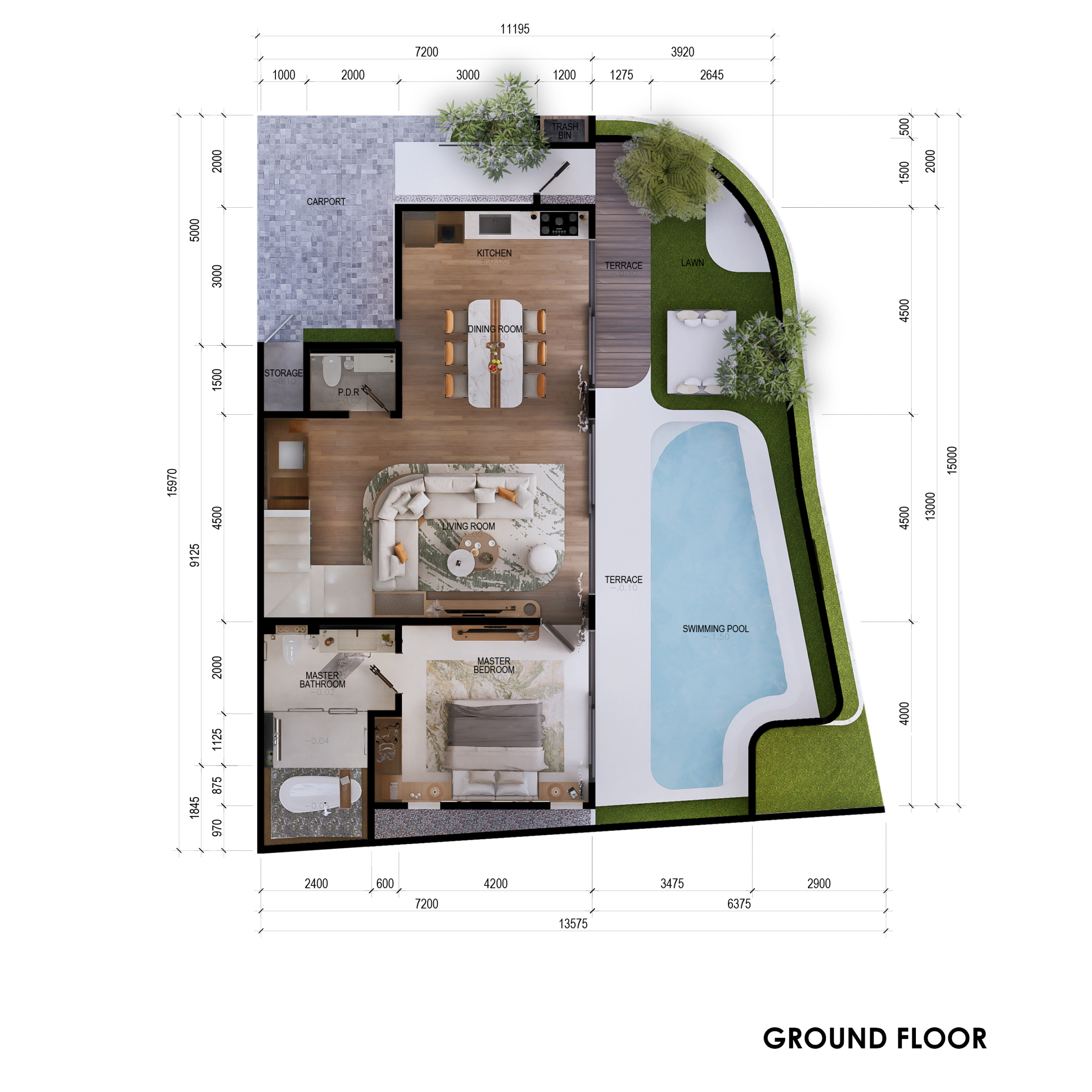
Valora Sanur was designed for daily life rather than short stays. It has nine villas behind one gate on Jl. Bumi Ayu, with 24-hour security. The master bedroom is on the ground floor near the entrance, with no single step from the gate into the villa. Bathrooms have grab bars and skylights. Bali International Hospital is 2.7 km away and Sanur Beach 1.8 km. PBG and SLF (the building permit and certificate of function) are included in the price, and the villas are under construction for completion in May 2027. You are welcome to visit the marketing gallery on site, open daily from 10 AM to 5 PM, or contact the team at atrea.id.
Sources
- Antara News Bali — “Pemprov Bali dan KAI kerja sama kembangkan trem berbasis baterai rute Bandara-Canggu” (corridor 150,000 people / 80,000 vehicles daily; full line 2029) — 2 Sep 2026 — https://bali.antaranews.com/berita/412671/pemprov-bali-dan-kai-kerja-sama-kembangkan-trem-berbasis-baterai-rute-bandara-canggu
- Antara News (Mataram) — “Bali siapkan taksi laut untuk urai kemacetan kawasan wisata” (Canggu shortcut cannot be widened; no priority for Canggu roads; Deputy Governor Giri Prasta) — 19 May 2026 — https://mataram.antaranews.com/berita/554247/bali-siapkan-taksi-laut-untuk-urai-kemacetan-kawasan-wisata
- Bali Post — “Dibandingkan Tahun Lalu, Kunjungan Wisman Bali Turun 1,62 Persen” (BPS Bali non-star occupancy 43.16% Aug 2026 vs 50.26% Aug 2025) — 2 Oct 2026 — https://www.balipost.com/news/2026/10/02/585977/Dibandingkan-Tahun-Lalu,Kunjungan-Wisman…html
- CNBC Indonesia — “Turis asing membludak tapi kondisi hotel di RI tak ramai, ada apa” (PHRI on illegal accommodation) — 7 May 2026 — https://www.cnbcindonesia.com/news/20260507135338-4-733110/turis-asing-membludak-tapi-kondisi-hotel-di-ri-tak-ramai-ada-apa
- The Jakarta Post — “Bali tightens crackdown on unlicensed tourist accommodation” (470,000 listings, ~31,000 with NIB; Koster on platforms) — 22 May 2026 — https://www.thejakartapost.com/business/2026/05/25/bali-tightens-crackdown-on-unlicensed-tourist-accommodation.html
- Antara News (Jogja) — “Kemenpar menindak 1.600 akomodasi tidak berizin dari OTA per Agustus 2026” (1,600 operators, delisting from 1 Aug 2026) — 27 May 2026 — https://jogja.antaranews.com/berita/831404/kemenpar-menindak-1600-akomodasi-tidak-berizin-dari-ota-per-agustus-2026
- Kompas — “Kemenpar Tak Tutup Langsung Vila Ilegal di Bali, Minta Pemilik Urus Izin” (help to license, not close) — 31 May 2026 — https://regional.kompas.com/read/2026/05/31/091229378/kemenpar-tak-tutup-langsung-vila-ilegal-di-bali-minta-pemilik-urus-izin
- The Jakarta Post — “Bali to issue regulation banning villa and hotel construction on agricultural land” (post-flood announcement) — 16/17 Sep 2025 — https://www.thejakartapost.com/indonesia/2025/09/17/bali-to-issue-regulationbanning-villa-and-hotel-construction-on-agricultural-land.html
- RRI Denpasar — “Perda Pengendalian Alih Fungsi Lahan Diharap Bukan Macan Kertas” (Perda Bali No. 4/2026 on productive land conversion and nominee ban) — 6 Mar 2026 — https://rri.co.id/denpasar/regional/2240991/perda-pengendalian-alih-fungsi-lahan-diharap-bukan-macan-kertas
- detikBali — “Resmikan KEK Sanur dan Bali International Hospital, Prabowo: Ini Terobosan” (25 Jun 2025; 255 beds, 8 operating rooms, 4 cath labs) — 25 Jun 2025 — https://www.detik.com/bali/berita/d-7982169/resmikan-kek-sanur-dan-bali-international-hospital-prabowo-ini-terobosan
- DJKN Kemenkeu (Kanwil Bali Nusra) — “Jalan Tol Bali Mandara” (Benoa–airport–Nusa Dua) — https://www.djkn.kemenkeu.go.id/kanwil-balinusra/baca-berita/28509/Jalan-Tol-Bali-Mandara.html
- Pasal.id — Perda Provinsi Bali No. 2 Tahun 2025 (levy exemption for KITAS/KITAP holders, Art. 4A) — https://pasal.id/peraturan/perda/perda-provinsi-bali-no-2-tahun-2025
- Atrea Development — Valora Sanur fact sheet (design decisions, distances, permits, completion date) — internal